
Tarot Overview
Geographic Popularity
Tarot is clearly one of the most iconic and symbolic card games in France. Everyone knows this card game, accessible to all and highly appreciated both in high school – where it is undoubtedly the game of choice – and at friendly gatherings. Its popularity has significantly increased in recent years with the advent of mobile gaming.
In addition to its popularity in France, this game has also won over players in Belgium, Switzerland, and even Canada, where many dedicated Tarot enthusiasts can now be found. Federations and clubs have even been established to meet the demand in these countries. In recent years, English-speaking players have joined the movement and have been captivated by this highly strategic game where skill trumps luck.
Game Variants
Tarot is a game that has existed for several centuries. It has been passed down from generation to generation, which has allowed the rules of the game to undergo numerous modifications. This is why today you can find several variants of this thrilling card game.
French Tarot consists of 78 cards: 56 suit cards, 21 trumps, and one special trump that serves as a joker – the excuse. Some variants are played with completely different decks, notably Italian Tarocchi or Königrufen.
Classic Tarot Features
How to Play
Introduction
Depending on the number of players, Tarot can be both a team game and an individual game that requires a lot of strategy to win. It also requires a good understanding of the game dynamics and the various cards. A Tarot deck consists of a total of 78 cards, including 56 standard cards and 22 trumps.
Card Distribution and Scoring
The number of players determines the number of cards each player receives. The deal is done in two stages: first, cards are distributed to the players, and then a reserve is set aside in the middle, known as "the Dog". This reserve is used by the bidder after the auction. Depending on the variant, the cards are dealt as follows:
- 3-player Tarot: Each player receives 24 cards and the “chien” consists of 6 cards.
- 4-player Tarot: Each player receives 18 cards and the “chien” consists of 6 cards.
- 5-player Tarot: Each player receives 15 cards and the “chien” consists of only 3 cards.
The trumps are more important than the standard cards and are each worth 4.5 points. The King is worth 4.5 points, the Queen is worth 3.5 points, the Knight is worth 2.5 points, and the Jack is worth 1.5 points. Every other numbered card is worth only 0.5 points. The Petit is one of the three important cards, called "bouts", the other two being the 21 and the Excuse.
Game Progression
When the game begins, each player first chooses whether to be the bidder or to be part of the defense: this is the bidding phase. If a player decides to bid, they must choose one of the following four contracts: petite, garde, garde sans chien, or garde contre chien. If no player bids during a round, the cards are redealt.
During the game, players play one card in turn, following the suit led in the trick. If a player does not have a card in the led suit, they must play a trump, or, if they have none, any other card.
Winning the Game
A game consists of three rounds, and each round contains several tricks. A player may be the bidder in one round and part of the defense in the next. The most important point is that each side must achieve its objective: the bidder must score a predetermined number of points based on their contract and the bouts they possess, while the defense must do everything possible to prevent that.
In any case, winning a game of Tarot requires great anticipation and strategic use of the cards in hand. The player who accumulates the most points over the three rounds wins the game.
History & Origins of Tarot
Origins of Tarot
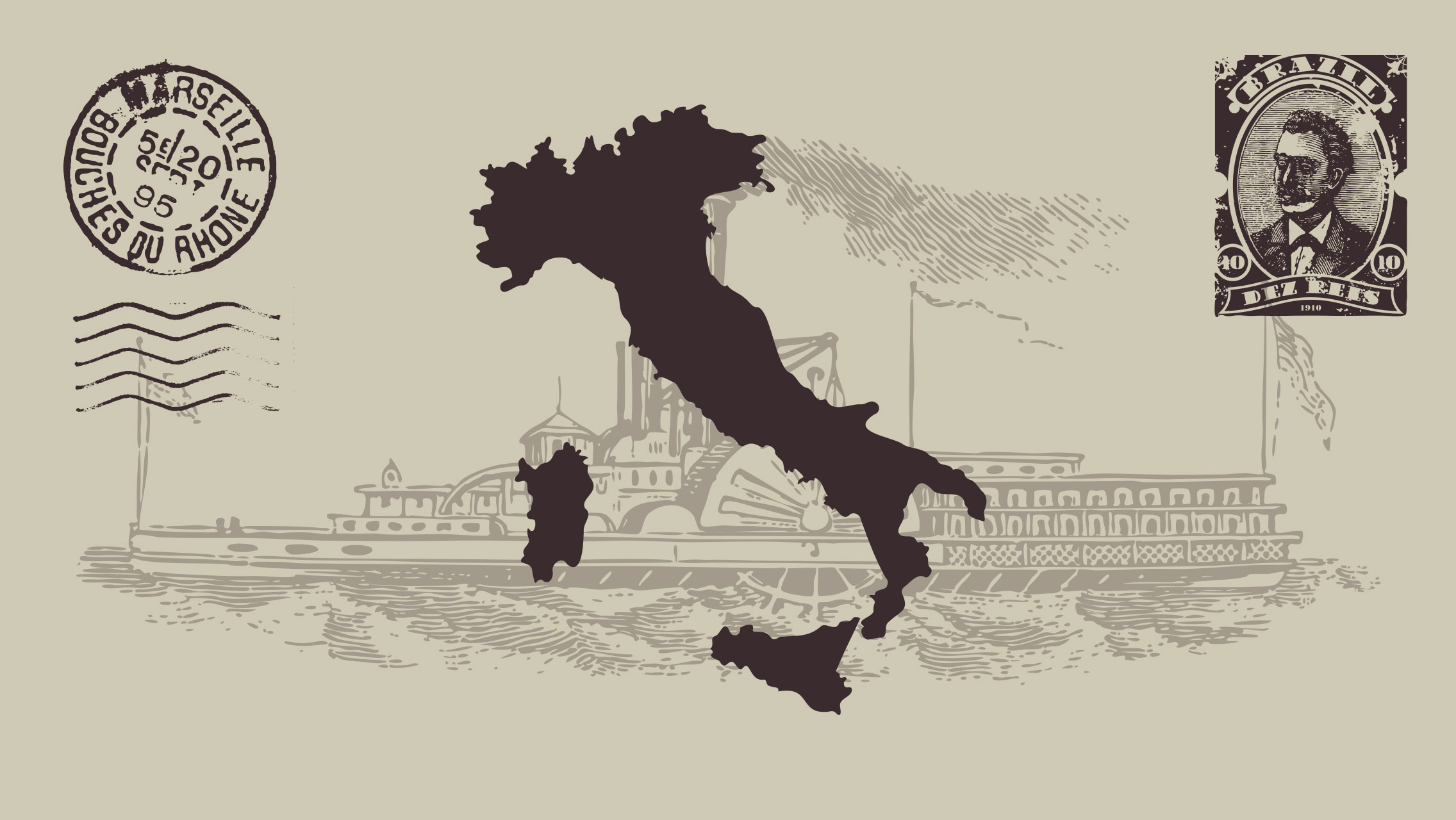
The exact origins of the tarot game remain rather obscure, many consider it an authentic heritage passed down through the ages. It was introduced to Europe from Spain and finds its roots in ancient Arab card games to which illustrated cards called “trumps” were added. These cards give the game its unique character and pave the way for various strategies to win. The history of tarot is estimated to have begun in the 14th century, when the Italian nobility played a card game known as “Tarocchi.” After that, the game spread throughout Europe, particularly in France and Germany. The rules gradually transformed to reach the familiar rules we know today.

Tarot Today
Today, tarot remains a highly popular game that is still widely played. It is a fascinating pastime that perfectly combines strategy, luck, and anticipation. Many people engage in this activity for pleasure, and there are even various competitions organized around it that attract a large number of participants worldwide.
Apps such as Super Tarot have helped revive and spread the game. Players can find opponents and partners at any time or invite friends without having to arrange a physical meeting. It is also quite remarkable to see that our elders have fully embraced these apps and play many games daily. These applications serve a public purpose by helping to prevent the isolation and loneliness of these vulnerable individuals.

Glossary of Terms
Trump
A trump represents an illustrated card with a number, there are 21 trumps in Tarot. These are the strongest cards in Tarot, and the strength of a trump is indicated by its number.
The Dog
This is a reserve of 6 or 3 hidden cards at the beginning of the game. When the bidder chooses their contract, these cards are added to their hand.
The Petit
This term is used to define the smallest trump, namely the one numbered 1. It plays a key role in a game of Tarot.
Bidding
Bidding takes place at the beginning of each round, where each player chooses a contract or passes. The bidder is the one who opts for the most challenging contract.
The Excuse
This card acts as a joker and can be played at any time during a round. If a player wishes to avoid losing another card, they can play the Excuse. It is impossible to win a trick with the Excuse.
Hand Announcement
When a player holds 8, 10, or 13 trumps, they can choose to reveal them to the other players at the beginning of the game. Although this reveals part of their strategy, it earns them additional points.
Contract
This is the commitment chosen by the bidder at the beginning of the round. Each contract has its own level of difficulty. The more challenging the contract, the more points the bidder scores at the end of the round.
Calling a King
This term appears in the 5-player variant of Tarot. When the bidder is designated, they choose a king of a specific suit to select a partner whose identity is only revealed when that king is played.
Small
This is a contract in which the bidder must only score more points than their opponents. It is the basic contract, also known as "small". The points gained and lost are minimal compared to other contracts.
Guard Without the Dog
This is a contract where the bidder chooses to play without the Dog. In this case, the Dog's cards remain hidden. The risks are greater, but so are the rewards.
Guard Against the Dog
Not only does the bidder not use the Dog's cards, but at the end of the round, the points from the Dog are directly awarded to the defense. This is a risky contract that requires a strong hand.
Camp
In Tarot, there are only two sides: the bidder and the defense. The bidder plays alone (or with their partner in the 5-player version), while the remaining players, constituting the defense, play as a team.
Trick
A trick represents the collection of cards played by the players during a round, there are several tricks in each round. The player who plays the highest card wins the trick.
Capot
This term is used when one of the players wins every trick in a round. It is a rather rare situation, as the player achieving this must have a very strong hand from the beginning.
Misère
This is an announcement that must be made at the beginning of a round by one of the defensive players when they are sure they will win no tricks during the round.
Petit au Bout
The Petit is the trump numbered 1. When a bidder manages to hold onto the Petit until the end of the round and wins the last trick thanks to it, they earn extra points.
Valat
This is a very rare situation. A valat is declared when one side wins every trick in a round. To achieve this, one must not only have excellent cards but also demonstrate great strategic skill.
Announcements
These are special declarations made by players during or at the beginning of a round to earn extra points. If the player fails to achieve the announced goal, they systematically lose points.
Popular Card Games in France
Overview
A wide range of card games hold an important place in the world, but especially in France. Some of these games represent a true heritage that has been preserved over the years. If you are a fan of card games, discover some of the most played card games in France.
Belote
Belote is also one of the favorite card games among the French, played both among friends and in competitions. It is a strategic game composed of 32 cards. It can be played by 2 up to 6 players, but the most played and appreciated version is the 4-player game.
Coinche
Coinche is another form of Belote, enjoyed primarily for its strategic nature and the anticipation required based on the contracts announced by opponents. It is also very well-known, as it is quite similar to Tarot, but is played with a standard 52-card deck.
Manille
This is a flagship card game from the south of France with Spanish origins. It is played with 32 cards and two teams compete against each other. The team that scores the most points wins the game. Once dethroned by Belote, this game is also played in 2 teams of 2 players. This game includes numerous regional variants.
Bridge
Bridge is a trick-taking game highly appreciated for its simple-to-understand rules. It pits two teams of two partners against each other and is played exclusively with a 52-card deck. Although its rules are easy to grasp, the strategies are very numerous, and one must join one of the many bridge schools to master this game that is both simple and complex at the same time.
Whist
This trick-taking card game, with and without trumps and without bidding, originally from England, has perfectly captivated the French. It is somewhat similar to Bridge but features simpler rules. It is played with 52 cards and the 4 players are divided into 2 teams of 2. It is a very popular game across the Atlantic.
Piquet
Originating from 16th-century France, this card game, where strategy and bluff are key, continues to be played centuries later. It is generally played with 32 cards, and usually, it is played by two people, unlike other card games. However, there are also 4-player variants.
Scopa
This is the quintessential Mediterranean card game! Originating in Italy centuries ago, Scopa is a fascinating game still played today all over France. The cards are quite unique, and the goal of the game is to capture specific cards to score points.
Hearts
Hearts is certainly one of the most played online card games, and it has been so for many years. The objective is very simple: avoid taking the Queen of Spades as well as the Hearts, and force your opponents to take them. It was widely popularized with the Windows operating system, which included it by default.
War
This is a very simple card game, enjoyed by both adults and children. The rule is very simple: play your cards one by one, the player who plays the highest card wins the trick. There is very little strategy, just luck, but this game has always been popular and always brings lots of laughter.
Écarté
Écarté was once the most played and appreciated card game among the nobility. Today, it has maintained its place at the heart of the French by being one of the most beloved games. Originally played by two, with variants for three or four players, it includes concepts such as the deal and the discard.
Trente et Quarante
If you enjoy games of chance, this game is for you! It is a card game widely played in French casinos. Very similar to blackjack, it will delight casino players.
Poker
When it comes to card games, it is impossible not to mention poker. It is the favorite game of those who appreciate strategy, psychology, and probability calculations. While there is always the beginner's luck, in this game, the importance of skill increases with experience.
Online gaming platforms have allowed a wider audience to discover certain card games. That is why some “vanishing” games have become popular again today.